A system-driven long-haul aviation platform
at a glance
CanAm is an integrated long-haul mobility platform connecting North America and Africa via a strategically positioned Atlantic hub on the Canary Islands.
The new airline is designed outside conventional airline paradigms.
Rather than dense route networks and alliance dependency, CanAm focuses on operational simplicity, high-capacity widebody aircraft and synchronized passenger, cargo and premium tourism flows.
Core characteristics
- Integrated transatlantic platform linking North America and Africa
- High-capacity Boeing 747-400 fleet with strong passenger and cargo economics
- Modular growth model: ACMI start → own AOC → scalable network expansion
- Multiple synchronized revenue streams: premium travel, transit traffic, cargo and cruise integration
Platform concept
CanAm combines several structurally complementary traffic streams into one operational system:
- premium passenger travel
- selected business-class-only routes
- structured USA–Africa transit flows
- cargo operations into Central and West Africa
- integration with luxury cruise and high-end tourism networks
This creates a platform model rather than a classic airline, with synchronized demand instead of isolated routes.
Market access is built around large catchment areas and structurally underserved intercontinental corridors, with limited direct competition outside existing alliance hubs.
Fleet strategy
Operations are centered on proven, clean Boeing 747-400 aircraft.
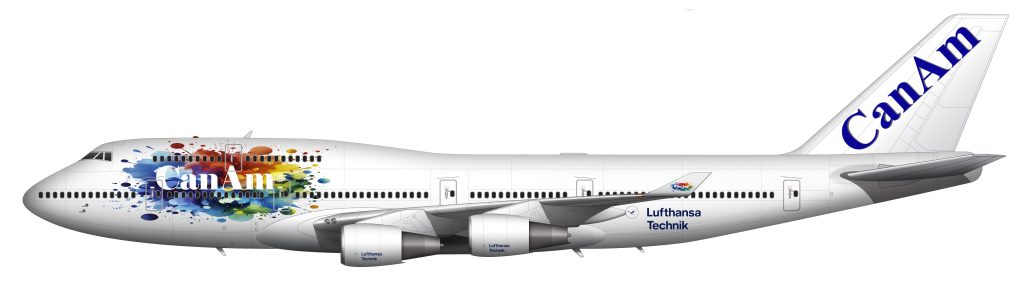
This enables:
- low entry capital expenditure
- exceptional payload capability
- combined passenger and cargo economics
- operational resilience through large-unit scale
The aircraft acts as a system carrier, not merely a transport asset.
Modular growth architecture
CanAm follows a staged, performance-driven development path:
- ACMI-supported initial operations
- transition to own AOC
- progressive fleet scaling
- network expansion based on validated demand
Each phase is designed for capital efficiency, controlled complexity and operational stability.
Growth is demand-led, not speculative.
Investment perspective
CanAm addresses investors seeking exposure to structural inefficiencies in global long-haul aviation and logistics.
The model is built around:
- economies of scale through large aircraft
- integrated passenger and cargo revenue
- reduced operational complexity
- modular scalability
- platform-based partnerships
Rather than pursuing rapid expansion, CanAm prioritizes system robustness and long-term value creation.
Investor entry points
Executive Summary
Investor Business Case
Why CanAm
Competitive Situation
Financing Aspects and ROI
For more confidential information, please contact:
| for English / French / German: | for English / Spanish |
| Klaus J. Lauth Management@CanAm.aero | Esteban J. Cajeres Cargo@CanAm.aero |