Comfort Is Not an Extra. It Is the System.
Long-haul travel is not experienced in miles alone.
It is experienced in hours spent seated, the space available to move, the quality of rest, the ease of a connection and the time remaining when the passenger finally arrives.
The CanAm Experience brings these elements together: true widebody aircraft, generous premium cabins, intelligent scheduling and a carefully coordinated mid-Atlantic gateway.
The objective is simple: To make a very long journey feel naturally comfortable.
True Widebody Comfort
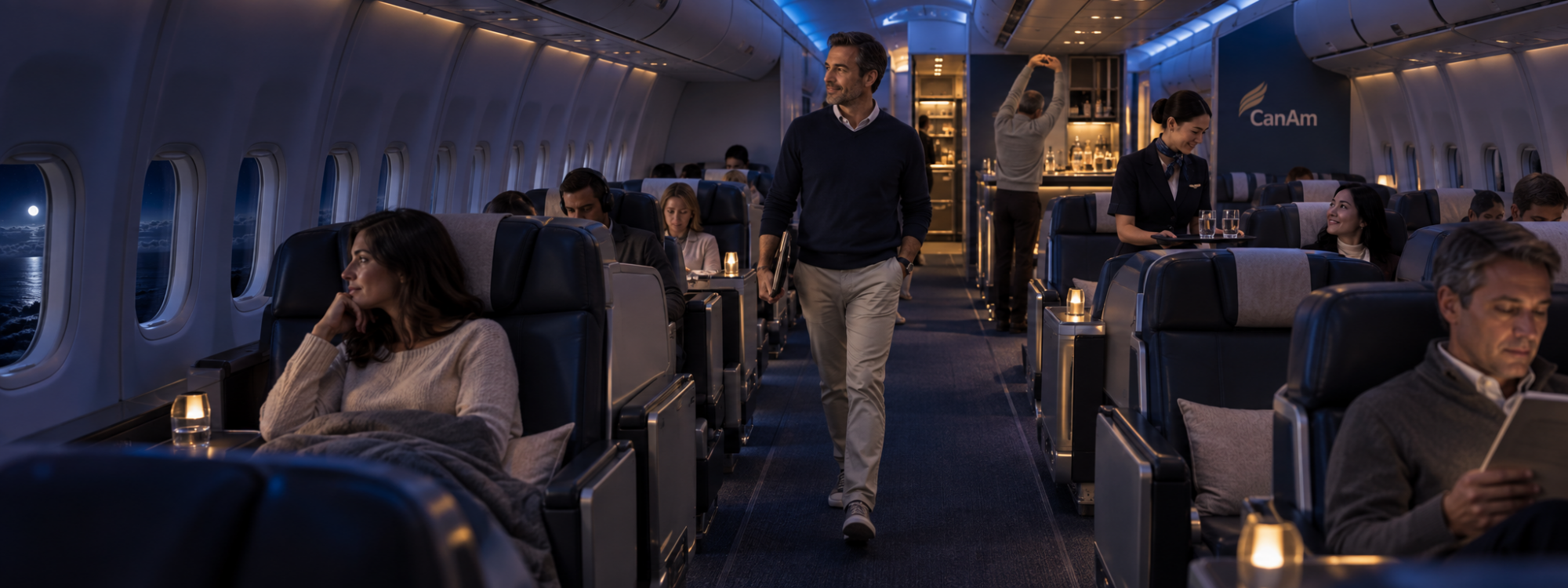
From the planned Airbus A340-600 launch operation to the future Boeing 747-400 fleet, CanAm is built around genuine long-haul widebody aircraft. Two aisles, generous cabin volume and reduced seating density create space to stand, stretch and move. First Class and Atlantic Class replace the conventional division between luxury at the front and confinement at the rear.
Comfort is not added after the aircraft has been filled with seats.
It begins with the space CanAm chooses not to fill.
Break the Journey, Not the Flow
For passengers traveling between North America and Africa, the planned stop in Gran Canaria divides an exceptionally long journey
into two more natural segments.
Time to leave the aircraft after a long journey, stretch, walk, refresh and physically reset before continuing the final leg in comfort – within a planned dedicated CanAm terminal area designed to make the onward connection calm, clear and dependable.
Properly designed, the mid-Atlantic stop is not an inconvenience. It becomes part of the passenger experience.
Intelligent Scheduling Gives You Back Time
CanAm’s schedules are planned around how passengers actually travel.
Evening departures from North America allow passengers to settle in and rest during the eastbound crossing. Arrival in Gran Canaria during the afternoon leaves enough time to check in, unwind and begin the stay without losing another night.
Westbound flights are intended to leave around midday. Passengers can enjoy breakfast, reach the airport without rushing and follow the sun across the Atlantic on their flight home.
Because of the time difference, passengers may arrive in North America only one or two hours later on the local clock than they departed from the Canary Islands.
Compared with fragmented itineraries through distant European hubs, intelligent scheduling can return almost two days across the complete round trip.