
Why a Mid-Atlantic Stop can make Long-Haul Travel much more Comfortable
Long-haul travel should not feel like an endurance test
The CanAm Experience begins with a simple premise: space, time and calm matter. Widebody aircraft, premium seating, intelligent scheduling and carefully coordinated connections create a journey that feels comfortable from departure to arrival.
Long-haul flying is often measured in distance, speed and theoretical convenience. The nonstop flight is usually presented as the ideal: board once, remain seated, arrive many hours later.
But the body may experience this differently: Ten, twelve or thirteen hours in one aircraft can be exhausting especially because movement is limited, circulation slows, sleep is fragmented, and the journey can feel more like endurance than travel.
Imagine that such a long-haul journey were performed – God forbid – in the highly praised A321XLR. The reality would still be that of a modern single-aisle aircraft: limited cabin width, restricted movement, and lavatories concentrated at the front and rear, where queues from the extended cabin inevitably form beside passengers seated on the aisle.
CanAm, by contrast, is built around true long-haul widebody aircraft, beginning with the Airbus A340-600 during the ACMI launch phase and progressing toward the Boeing 747-400 as the core of CanAm’s planned own fleet.
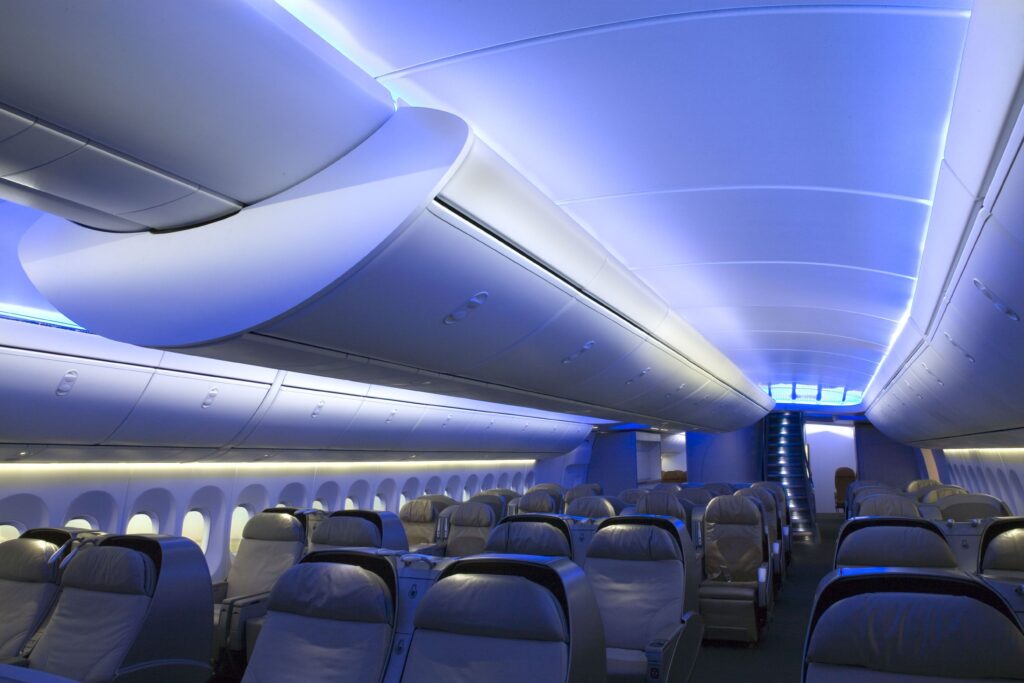
So, in essence, CanAm Airways takes a completely different view. That view also shapes the network itself.
Connecting North America, the Canary Islands and selected African markets through Gran Canaria is not only a geographic concept.
It is also a comfort concept.
A Different Kind of Connection
Instead of forcing passengers into one exceptionally long flight, the journey is divided into two more natural segments.
A flight from North America to the CanAm base in Gran Canaria would typically take around seven to ten hours, depending on the point of departure. Upon arrival at Las Palmas, passengers should not have to navigate a complex mega-hub, cross an anonymous airport maze or change terminals.
The CanAm concept calls for a structured, smooth and closely managed transfer through a planned dedicated CanAm terminal area.
Passengers can leave the aircraft, stretch their legs, walk, refresh, enjoy a coffee or visit the lounge before boarding the onward flight. The connection is part of one coordinated schedule, designed to minimize uncertainty, waiting time and the risk of a missed onward flight.
From Gran Canaria, Abuja is approximately four and a half hours away, while Cape Town is approximately nine and a half hours away. In both cases, the stop divides the journey into more manageable sections.
And This Really Matters:
The human body was not designed to remain almost motionless for thirteen hours. A well-planned stop in the middle of the Atlantic provides a physical reset: passengers can move again, support their circulation, ease stiffness and mentally prepare for the next stage of the journey.
Comfort Beyond the Seat
In premium travel, comfort cannot be measured by seat width alone.
A comfortable reclining seat matters. Personal space matters. Healthy meals matter.
But the duration and rhythm of the journey matter as well.
Gran Canaria is unusually well suited to this role. It is European, Atlantic-facing and positioned close to West Africa. It sits naturally between North America and Africa – not as a distant detour, but as a refined, well-positioned and operationally intelligent point of passage.
For CanAm Airways, this is an essential part of the broader North Atlantic Diagonal: a long-haul corridor designed to improve not only where passengers can travel, but how they experience the journey.
The stop in Gran Canaria is not a compromise. Properly designed, it becomes part of the product.
It turns a very long flight into a journey with time to pause, reset and continue.
And it transforms the Canary Islands from a destination alone into a mid-Atlantic gateway for refined long-haul travel.