A Maintenance, Repair, and Overhaul (MRO) in Aviation is an aircraft (or aviation components) maintenance facility certified by the country’s civil aviation authority. An MRO facility is capable of performing maintenance on an aircraft and its components in accordance with the manufacturer’s maintenance manual. Based on the maintenance capability, the regulatory authority certifies the processes and tools of the MRO facility.
An MRO facility can be part of the Original Equipment Manufacturer (OEM) or a standalone third-party certified facility. This article explores the various maintenance programs MROs run, as highlighted by Airshare and Lufthansa Technik.
Maintenance
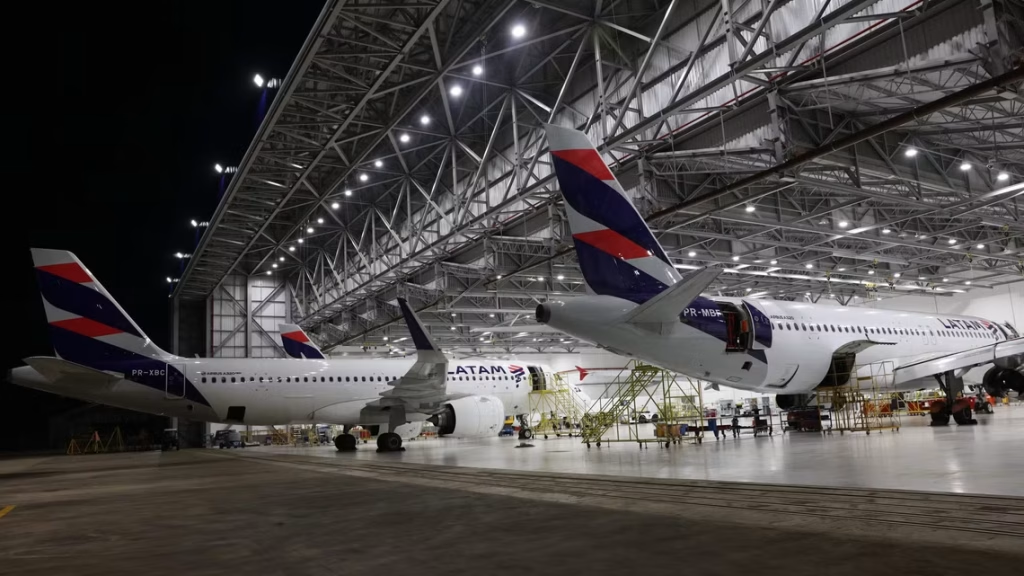
An essential program at MROs is maintenance, including visual and detailed inspection of aircraft, engines, and other major components. Depending on the scope of work, routine maintenance is required on aircraft at regular intervals. MROs also offer maintenance programs specific to customers, aircraft, and configurations.
According to Lufthansa Technik,
“Holding international licenses for maintenance, design and production, we provide tailored maintenance programs, modification, completion and conversion as well as innovative cabin products, material pooling or engine services. We supply you with digital fleet support.”
Repair
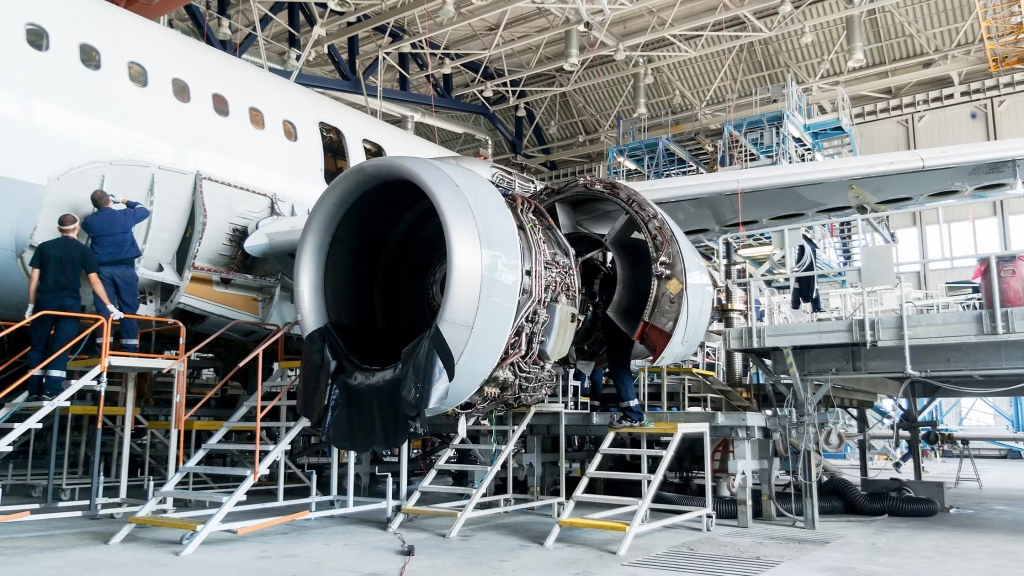
MRO facilities generally have repair programs that enable the serviceability of parts and components. In other words, inspected components deemed repairable can return to a serviceable condition after necessary repairs.
Some specialized repairs can be outsourced to the OEM or proprietary repair centers determined by the OEM.
Overhaul
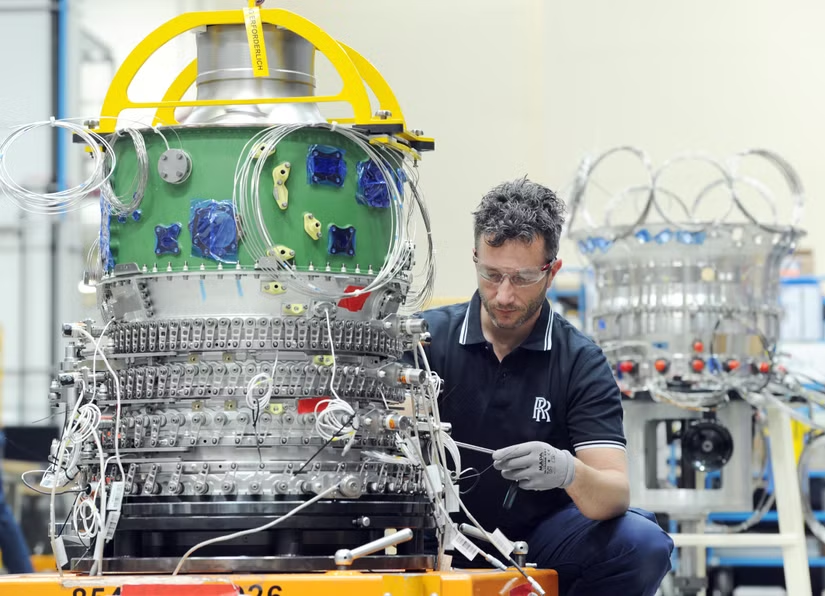
Overhauling refers to bringing the aircraft and components back to OEM standards. That may include repairing or replacing parts, assemblies, and components and restoring the aircraft in an overhauled condition.#
Overhaul tasks may also require modifications to certain modules, as the OEM prescribes. Moreover, the applicability of airworthiness directives (AD) and Service Bulletins (SB) is also performed by the MRO.
Types of MRO
MROs are generally associated with heavy maintenance of aircraft and engines. Heavy maintenance may require an aircraft to stay in an MRO facility for two to three months. Usually, heavy maintenance tasks are done every 60, 90, or 120 months. The frequency varies based on the aircraft’s usability and the OEM recommendations. During a comprehensive D check, for example, all major components, including engines, landing gear, and other systems, are removed. The cabin’s interior pieces, including seats, lavatories, and wall panels, are removed for maintenance.
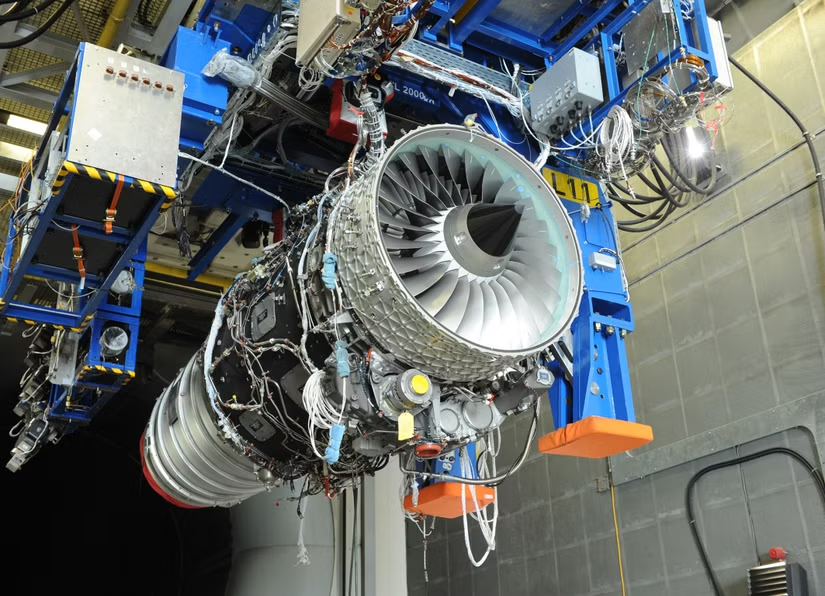
In the same way, engine MROs perform full-performance restoration of engines in approximately three months. In a typical MRO process, incoming inspections are performed before the disassembly of modules and assemblies begins. The maintenance scope is defined based on the aircraft or engine condition. The customer must approve the work scope before the aircraft or components are inducted into the shop.
After disassembly, parts are individually cleaned, inspected, and sent for repair. Life-limited parts (LLPs) are replaced. All serviceable parts are assembled before the testing of components and assemblies begins.