
A Practical, Capital-Efficient Launch Path
The first operating phase of CanAm Airways is intended to use an ACMI-supported structure with USC GmbH of Frankfurt, an established German long-haul operator with a fleet of Airbus A340 aircraft.
Subject to final agreement, this structure would provide proven widebody capacity, experienced crews, maintenance support, and an established operating framework for the launch phase.
Why the A340-600 Fits the Launch Phase
The Airbus A340-600 offers proven intercontinental range, substantial passenger and cargo capacity, a spacious widebody cabin, and four-engine operations that are not subject to twin-engine ETOPS limitations. These characteristics make it well suited to CanAm’s premium-oriented launch model.
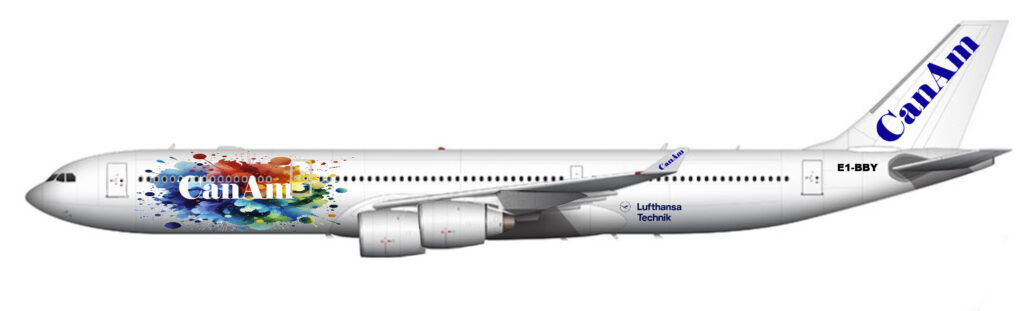
The Airbus A340-600 is not presented as CanAm’s final fleet solution. Its purpose is to enable early operations, generate revenue, establish the brand, and validate the corridor before transitioning to a dedicated CanAm fleet platform.
The Commercial Purpose of the ACMI Launch Phase is to create and validate early Market Evidence; -and Presence.
Building the CanAm Brand
Subject to commercial and operational arrangements, aircraft deployed for CanAm services could carry CanAm branding while remaining fully operated by USC.
This would allow CanAm Airways to enter the market visibly as a distinct long-haul brand, while operational responsibility remains with an experienced ACMI operator during the launch phase.
Proving the Corridor
The commercial purpose of the ACMI phase is to produce real market evidence.
Initial operations would allow CanAm to evaluate:
- Passenger demand and booking behavior
- Achievable fares and route performance
- Airport handling and schedule reliability
- Cargo contribution
- Cruise and tourism integration
- North America–Africa transit flows
- Premium-cabin acceptance
This operational evidence is considerably more valuable than relying on projections alone.
A Bridge to the Future CanAm Platform
The ACMI phase is not a substitute for CanAm’s long-term strategy. It is the first controlled step toward it.
The structure allows CanAm to enter the market earlier, limit initial capital exposure, validate the corridor, and establish the brand while preparing its own European operating platform and future widebody fleet.
If the first phase confirms the market logic, cooperation with USC could expand into network development, fleet transition, crew planning, and support for the gradual build-up of CanAm’s own long-haul organization.
All proposed operating structures remain subject to final agreements, regulatory approvals, financing, and technical validation.
Strategic Summary
The ACMI phase is not a substitute for CanAm’s long-term strategy.
But it is the first, very disciplined step toward it.
It allows CanAm to start flying much earlier, reduce initial capital exposure, validate the corridor and build the brand while preparing the dedicated Boeing 747-400 platform in parallel.
Then, when routes and frequencies increase, the Airline will have enough grounds to grow with their launching partners.