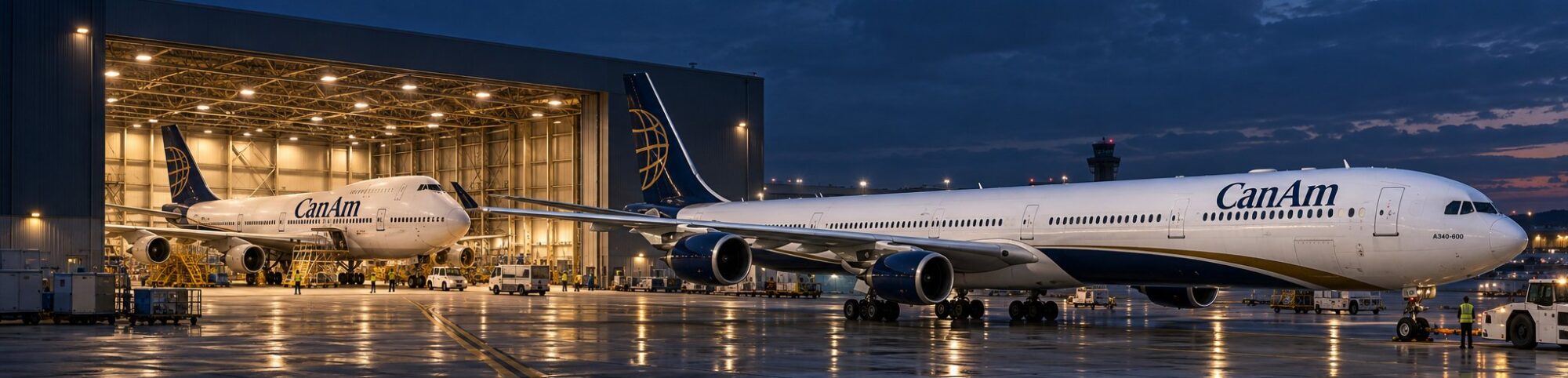
CanAm’s aircraft and launch strategy is based on a staged development path, designed to reduce initial complexity while preserving the ability to scale into a more controlled long-haul platform.
The first phase is intended to use ACMI-supported operations with USC’s Airbus A340 fleet.
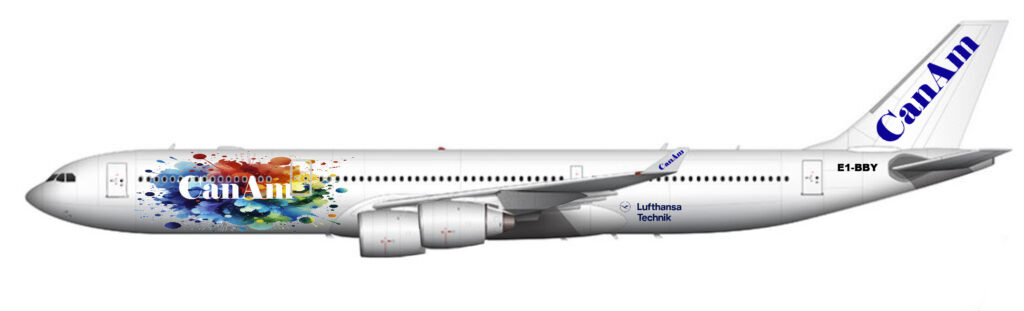
This allows CanAm to enter the market with proven widebody capacity, established operational infrastructure and lower start-up exposure than a full airline launch from day one. The purpose of this phase is not to build dependency, but to validate demand, routes, product acceptance, handling processes, gateway performance and commercial traction under controlled conditions.
The following phase is intended to move CanAm toward greater operational control, including its own aircraft strategy, progressive fleet scaling and, where appropriate, its own AOC structure. This staged path allows the project to build operational depth step by step, rather than carrying the full burden of fleet ownership, certification, staffing and technical infrastructure before the market has been sufficiently proven.
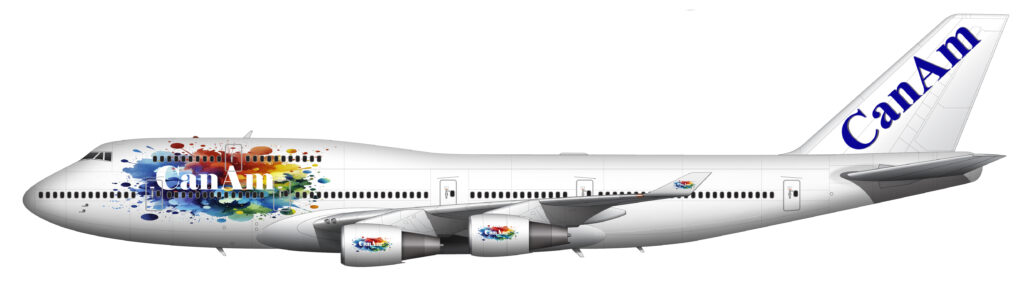
The aircraft strategy is centered on proven high-capacity widebody aircraft. These aircraft are not treated merely as flying seat platforms, but as core system assets. Their role is to support premium cabin economics, cargo capability, long-haul range, brand distinction, payload resilience and strong unit economics on selected intercontinental corridors.
CanAm’s logic is therefore different from a conventional start-up airline buying aircraft first and searching for sufficient demand afterwards. The launch strategy is designed to connect aircraft deployment with validated corridor strength, gateway readiness, capital discipline and operational stability.
The ambition is not rapid expansion for its own sake, but the controlled build-up of a resilient Atlantic aviation platform whose growth is justified by demand, performance and strategic value.