
CanAm Airways is developing a new premium aviation corridor connecting North America, the Canary Islands and select African markets.
At the geographic center of the concept is Las Palmas, a European Atlantic gateway positioned between three continents. From here, CanAm intends to combine premium passenger travel, structured North America–Africa connections, Canary Islands tourism, cruise feeder traffic and high-value cargo within one coordinated widebody platform.
The very name CanAm reflects the geographic origin of the project:
connecting the Canary Islands with the Americas and extending this Atlantic bridge into Africa.
Why CanAm Exists
Travel between North America, the Canary Islands and many African markets remains fragmented. Passengers are commonly routed through distant European or Middle Eastern hubs, while tourism, business travel, cruise connections and cargo are treated as separate markets.
CanAm was conceived to bring these traffic flows together through a single, strategically positioned Atlantic hub.
The objective is not to create another conventional airline competing across hundreds of routes. CanAm is focused on selected corridors where geography, underserved premium demand, fragmented existing connections and complementary passenger and cargo flows can support a strong and scalable operation.
An Integrated Atlantic Platform
CanAm is structured around several mutually supporting elements:
- Premium long-haul passenger travel
- North America–Africa transit traffic
- Direct access to the Canary Islands
- Cruise and high-end tourism partnerships
- Integrated widebody cargo capacity
Each element strengthens the others. North American services bring passengers and cargo into Las Palmas. African connections extend the network beyond the Canary Islands. Tourism and cruise traffic support the transatlantic sectors, while cargo improves the economic performance of the entire operation.
This integration is the foundation of the CanAm business model.
A Focused Operating Model
CanAm intends to begin with a limited number of carefully selected North American and African gateways.
Coordinated arrival and departure waves in Las Palmas will provide efficient connections while allowing passengers traveling to the Canary Islands to begin their stay without unnecessary onward travel through mainland Europe.
The initial network is designed around operational focus rather than size.
Two aircraft can prove the corridor. Four aircraft begin transforming it into a genuine network.
Growth will follow demonstrated passenger demand, cargo performance and the progressive development of strategic partnerships.
A Phased Path to Operations
The CanAm launch strategy is divided into clearly defined stages.
Initial services are intended to begin through an established ACMI operating partner. This provides immediate access to aircraft, crews, maintenance and operational infrastructure while CanAm introduces the new corridor and builds its own organization.
In parallel, CanAm is preparing to establish its corporate base in the United States. The following phase will focus on developing a dedicated long-haul operating platform around US-registered aircraft, including the Boeing 747. The precise operating and certification structure will be developed in coordination with the appropriate US authorities and experienced legal and aviation partners.
This phased approach allows CanAm to enter the market with controlled initial capacity, prove the commercial model and progressively build the foundation for its own long-term fleet and operating structure.
Current Development Stage
CanAm Airways is currently assembling the operating platform, capital base, strategic partnerships and institutional support required to commence service.
Discussions and development work encompass airline operations, aviation law and regulatory planning, airport and regional cooperation, aircraft access, cargo, tourism, cruise partnerships, training and long-term fleet strategy.
The People Behind CanAm
CanAm is being developed by an international group of professionals with experience in aviation, aircraft engineering, commercial development, aviation law, quality management, tourism, cargo and international project development.
The project was founded by Klaus J. Lauth and is supported by specialists and strategic partners from Europe, North America and Africa.
Together, the team is working to transform a geographic opportunity into a commercially viable Atlantic aviation enterprise.
A New Corridor Between Continents
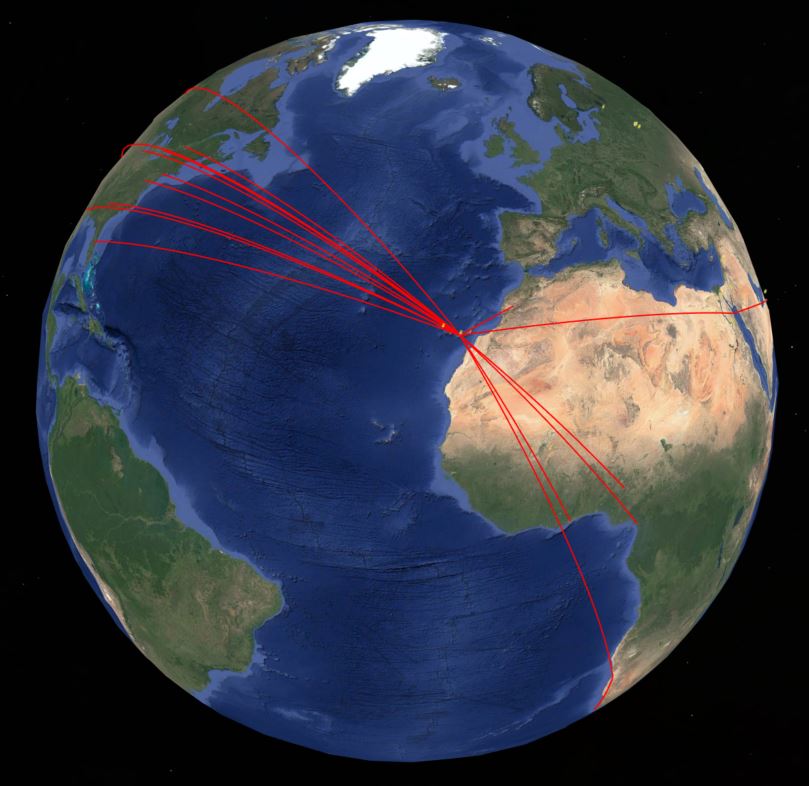
CanAm is not simply adding another route to the existing airline map.
CanAm is developing a new Atlantic corridor in which geography, premium passenger demand, cargo capacity, tourism and international partnerships operate as one connected system.
CanAm Airways – connecting North America, the Canary Islands and Africa through one integrated Atlantic platform.