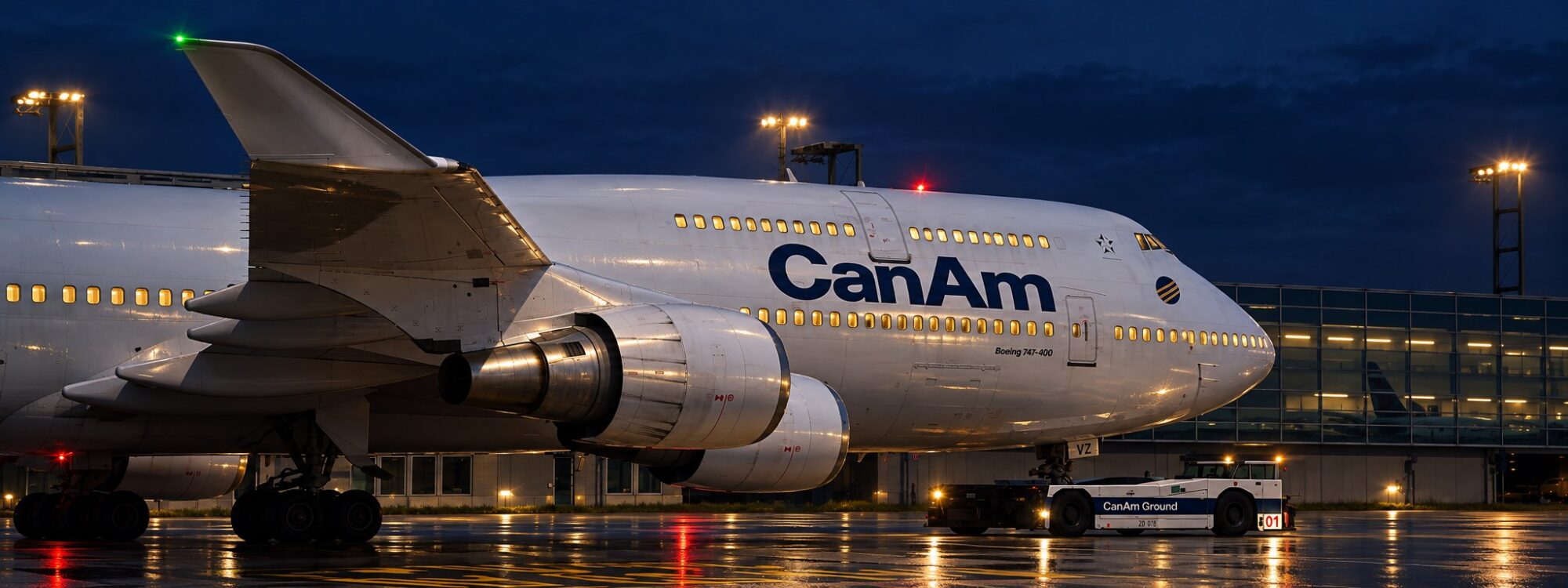
Still Reigning: The Queen of the Skies
Few aircraft combine global recognition, passenger appeal, intercontinental range, cabin volume, and cargo capability as effectively as the Boeing 747. For CanAm, however, the aircraft is not simply an aviation icon. Its potential role is based on the specific requirements of the CanAm network and business model.
Built for Passenger and Cargo Scale
The Boeing 747-400 provides the internal volume required for a spacious all-premium cabin combining First Class and Atlantic Class.
At the same time, its substantial lower-deck capacity allows commercial cargo to be carried alongside passenger baggage. This is essential to CanAm’s combined passenger-and-cargo model between North America, the Canary Islands, and selected African markets.
The aircraft can therefore support several revenue streams on the same rotation:
- Premium passenger traffic
- North America–Africa transit flows
- Cruise and high-end tourism groups
- Commercial cargo
- Special charter and project requirements
Capital Efficiency
The Boeing 747-400 is not the newest aircraft available, but it may offer an exceptional relationship between acquisition cost, refurbishment investment, capacity, and revenue potential.
CanAm may be able to introduce several carefully selected and refurbished widebody aircraft for the capital required for one new-generation long-haul aircraft.
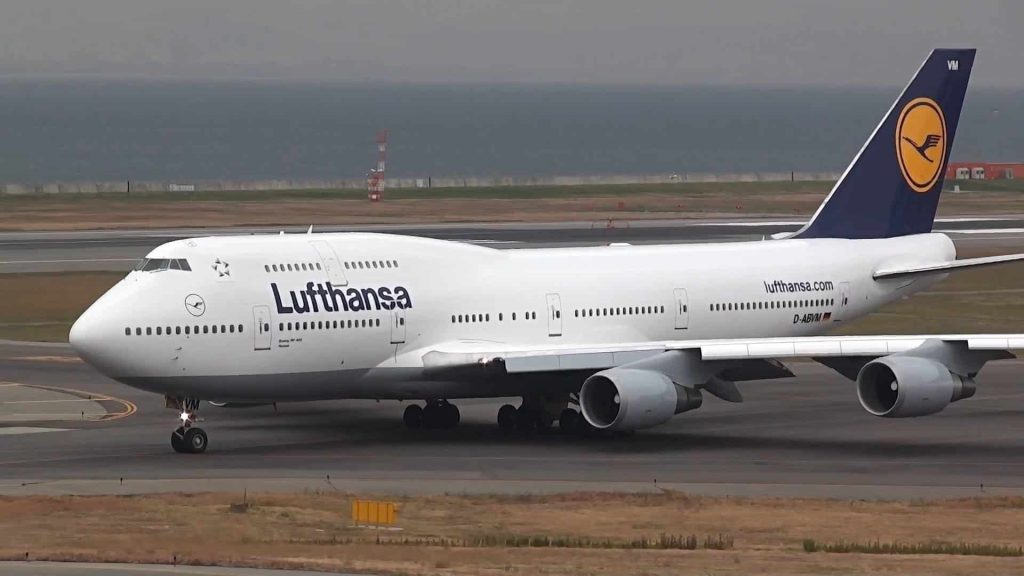
Lufthansa 747-400
The relevant question is therefore not simply which aircraft burns the least fuel. It is which aircraft can produce the strongest return on total capital employed within the intended network and product.
Fuel Consumption in Context
A Boeing 747 consumes more fuel than a modern twin-engine aircraft. CanAm does not attempt to conceal this disadvantage.
The business case depends on whether lower capital cost, higher premium-passenger revenue, substantial cargo contribution, and disciplined aircraft utilization can more than offset the additional fuel and maintenance expense.
The Boeing 747 is therefore not presented as the correct aircraft for every airline or every route. It is evaluated as a network-specific platform for CanAm’s particular combination of premium traffic, cargo, and long-haul capacity.
A Later-Stage CanAm Platform
The Boeing 747 is not intended to be the initial ACMI launch aircraft. CanAm plans to begin with Airbus A340-600 operations through an experienced ACMI operator in order to validate the corridor and limit initial capital exposure.
The Boeing 747 would enter at a later stage as the foundation of a dedicated CanAm fleet and future European AOC operation.
Any aircraft selected for this role would require complete technical due diligence, verified maintenance records, structural and engine assessment, refurbishment, cabin installation, and regulatory approval.
The Boeing 747 would not return because of nostalgia alone. It would return because its unique combination of space, payload, passenger appeal, cargo capacity, and acquisition economics may still create exceptional value on the right routes.